
Preguntas frecuentes (FAQ)
Här hittar du svar på de vanligaste frågorna om våra produkter, leveranser, garantier och service. Klicka på en kategori nedan för att komma direkt till det du söker – eller bläddra vidare.

Här hittar du svar på de vanligaste frågorna om våra produkter, leveranser, garantier och service. Klicka på en kategori nedan för att komma direkt till det du söker – eller bläddra vidare.
Un TIKI completo pesa solo 360 gramos.
Mediante un ventilador que ajusta el flujo de aire en función del patrón respiratorio del usuario, lo que prolonga la duración de la batería y reduce el consumo de filtros.
Nuestra mascarilla está fabricada con plásticos PET-G y TPE.
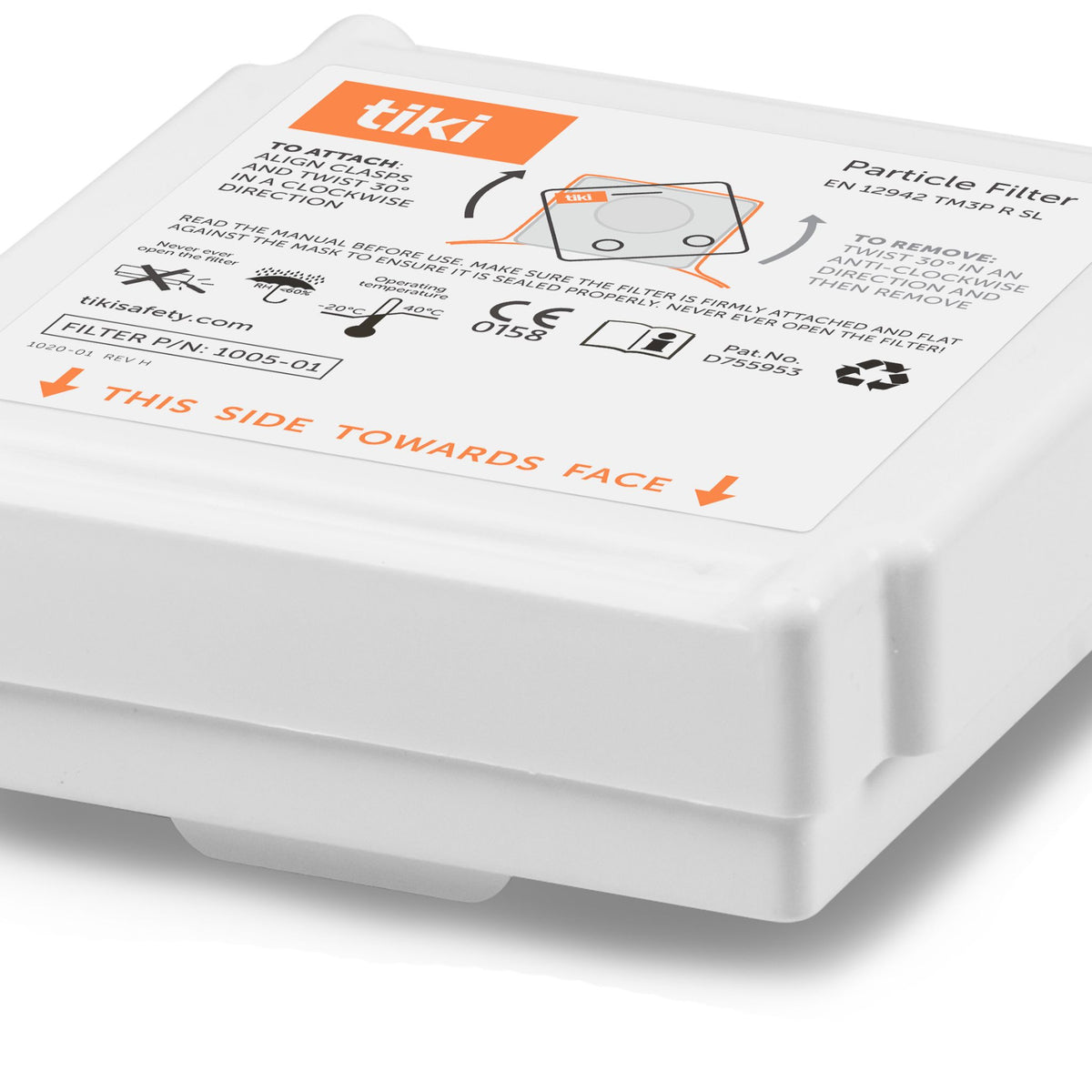
El filtro protege contra todo tipo de contaminantes particulados (P3), como polvo de cuarzo, amianto y bacterias.
Depende del entorno de uso. Por ejemplo, un artesano que utiliza TIKI varias veces a la semana puede necesitar cambiar el filtro cada 20 o 120 días, mientras que en el caso del chorro de arena puede ser necesario cambiarlo cada dos o cinco días.
Hasta 2,5 horas con la batería integrada y hasta 10 horas con la batería externa (accesorio).
Ya sea con el cargador de red incluido (220/110 V) o con un cargador de 12 V (accesorio) que se adapta a la toma de mechero del coche.
TIKI tiene tres sistemas de alerta integrados: 1) Cuando hay que cambiar el filtro de partículas o está obstruido. 2) Cuando la batería está baja y hay que recargarla. 3) Si la máscara no es hermética o tiene fugas.
En nuestras instalaciones de Upplands-Bro, a las afueras de Estocolmo, Suecia.
TIKI está disponible en tres tamaños: pequeño, mediano y grande. Para encontrar el tamaño adecuado, consulte la guía de tallas de TIKI.
Si el ventilador hace mucho ruido, puede ser porque la protección contra el aliento no está bien ajustada. Comprueba que el TIKI esté bien colocado y que tengas el tamaño adecuado.
TIKI no debe sumergirse en agua. TIKI es el único PAPR del mundo que ha sido probado y puede utilizarse en duchas de descontaminación.
Gracias a la capacidad superior de las baterías LiPo, TIKI puede almacenarse durante largos periodos de tiempo. Ponte en contacto con nosotros para obtener asesoramiento sobre la mejor forma de mantener las baterías cargadas.
Encontrará las especificaciones técnicas en el manual de instrucciones, que puede descargar de nuestro sitio web.
Para cuestiones relacionadas con la asistencia técnica, envíe un correo electrónico a support@tikisafety.com.
TIKI Medical es una máscara de presión positiva que filtra tanto el aire inhalado como el exhalado, lo que la hace especialmente adecuada para entornos con altos requisitos de higiene, como el sector sanitario, las unidades de infección y los laboratorios. TIKI protege tanto al usuario como al entorno.
TIKI Medical tiene una clase de protección P3, lo que le confiere la máxima protección tanto contra partículas sólidas (como el polvo) como contra aerosoles líquidos (como las gotas portadoras de virus). Ha sido probada según la norma EN 12941 clase TH3.
TIKI tiene un ventilador incorporado y autorregulable que proporciona sobrepresión. Esto hace que respirar sea fácil y cómodo, incluso durante turnos de trabajo largos.
Sí, TIKI tiene un diseño ergonómico y es muy ligero. Se ajusta cómodamente con un arnés elástico y cuenta con una visera grande que ofrece buena visibilidad y facilita la comunicación.
Está diseñado para:
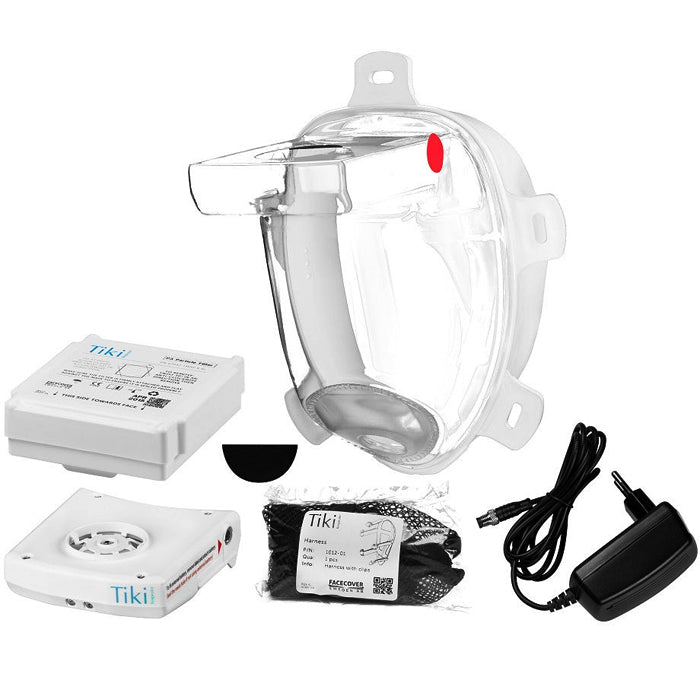
El paquete incluye:
Sí. TIKI Medical es una alternativa sostenible a las mascarillas desechables. Se puede reutilizar y almacenar durante mucho tiempo, por lo que es perfecta para las reservas de emergencia.
Encontrará guías de tallas para Medium y Large en los documentos descargables de la página del producto, disponibles en sueco, inglés y alemán.
No, todos los precios se muestran sin IVA. Los gastos de envío se añaden al realizar el pedido.
Visita nuestro canal de YouTube para ver vídeos más detallados.
Choosing the best PAPR (Powered Air-Purifying Respirator) isn’t about a single brand or model – it’s about finding the system that gives you the right protection level, comfort and visibility for your job.
This guide walks through what to look for in a PAPR and how TIKI’s lightweight, visor-based design fits into that picture for demanding users in construction, healthcare, laboratories and industry.
A PAPR (Powered Air-Purifying Respirator) uses a battery-powered blower to pull ambient air through filters and deliver clean, filtered air into a hood, mask or visor.
Unlike negative-pressure masks (such as N95, FFP2 or traditional half masks), PAPRs:
- Reduce
- Breathing
- Resistance
In European standards, high-performance PAPRs can be certified to EN12942 with TM3P protection, which corresponds to the highest particulate protection classes for powered respirators.TikiSafety AB
Different industries will have different “best” options, but the core evaluation points are the same:
Filter class (e.g. P3, HEPA)
Certified according to relevant standards (e.g. EN12942 TM3P in Europe)
Suitable for the type of hazard (dust, aerosols, infectious agents, etc.)
Total weight of head and neck
Breathing resistance and air flow
Noise level from fan
Heat build-up inside hood or mask
Field of vision
Fogging or condensation
Ability to communicate with colleagues and patients or customers
How quickly the system can be put on and taken off
How easy it is to clean and disinfect
Filter replacement and battery management
Compatibility with other personal protective equipment (helmets, hearing protection)
Suitability for your environment: construction dust, quartz dust, laboratory environments, healthcare, etc.
The “best PAPR respirator” is the one that scores highly across these factors for your specific tasks.
Negative-pressure respirators (e.g. N95 or FFP2 masks) rely on your lungs to pull air through the filter. That means:
Higher breathing resistance
More fatigue over time
Regulatory data on Assigned Protection Factors (APF) show that powered respirators generally offer significantly higher protection than standard filtering facepieces and even many full-face negative-pressure masks, particularly in real-world workplace conditions.
For environments with high dust levels, infectious aerosols or long exposure durations, PAPRs are often recommended as the preferred solution.
TIKI is a Scandinavian-developed PAPR system designed to solve several common problems seen in traditional powered respirators:
Instead of a heavy helmet, belt-mounted blower and hoses, TIKI integrates:
- fan unit inside the visor
- P3 filter with TM3P-level protection according to EN12942TikiSafety AB
- An elastic harness that keeps everything in place
This reduces weight, simplifies donning and increases freedom of movement.
The panoramic visor is designed to maintain clear vision and visual contact with colleagues, which is critical in:
- Construction and renovation
- Healthcare and emergency situations
- Laboratory and industrial work where hand signals and facial expressions are important
TIKI’s fan automatically adjusts airflow to maintain comfort and positive pressure inside the visor, helping to:
- Keep the breathing resistance low
- Reduce fatigue
- Maintain consistent protection under varying workloads
With its P3 filter and EN12942 TM3P certification, TIKI is designed for tasks involving:
- Quartz dust, construction and stone dust
- Industrial dust and aerosols
- Airborne infectious particles in healthcare and laboratories
Rather than claiming to be “the single best PAPR respirator for everyone”, TIKI is built as a high-performance alternative for professionals who value:
- Maximum mobility
- High visibility
- Real comfort during long shifts
A PAPR system may be the best respirator choice if you:
- Working daily in a dusty or contaminated air (quartz dust, construction, sanding, grinding)
- Need extended wear time without excessive fatigue
- Demands a clear view of your surroundings and team
- Do you want a reusable, sustainable solution instead of constant disposable mask use
If these points describe your workplace, a modern PAPR such as TIKI is often a better long-term solution than traditional disposable or half-mask respirators.
Within the TIKI range, you can choose a PAPR configuration that matches your field:
– TIKI START the core system for demanding dust and particle environments
- TIKI Pro/Multi/Medical – specialised versions tailored towards industry, multi-use settings and medical environments
- Filter and visor package – for ongoing use and replacement cycles
Each system shares the same core principles: powered filtration, high protection level, low breathing resistance and excellent visibility.